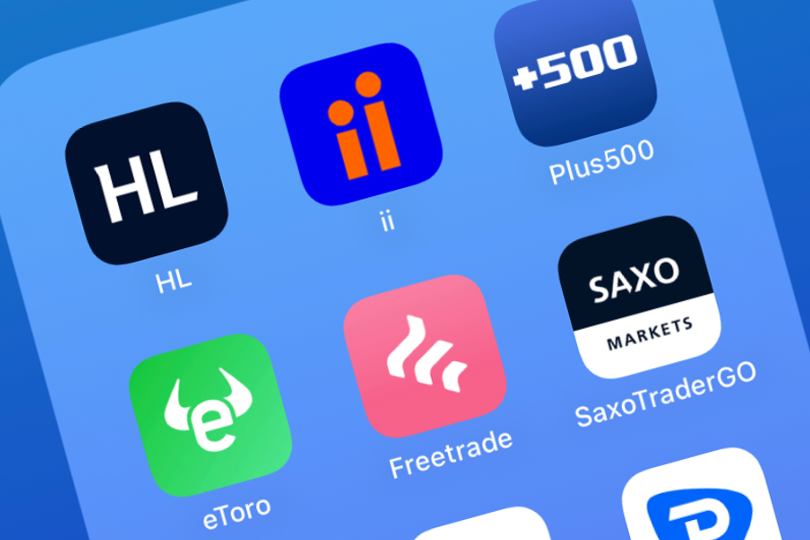
Short answer: eToro is the best trading app in the UK for 2026. It is the only platform I tested that merges commission-free share dealing, copy trading, and multi-asset access — stocks, ETFs, crypto, and commodities — inside a single FCA-regulated app. For active CFD and forex traders, IronFX offers tighter spreads and MT4 power. For hands-off ISA investors, Wealthfront-style automation is arriving in UK fintech, but the best current option is a different approach entirely: Frequency, an emerging platform building a modern, mobile-first experience for a new generation. And for self-directed portfolios with zero platform fees, M1 Finance-style pie investing is reshaping how UK investors think about long-term wealth.
Below is the full breakdown — how I tested, what I found, who each app actually suits, and what the marketing never tells you.
What Actually Makes a Trading App “Best” in the UK?
Before the rankings, a reality check. The UK market is not the US market. What matters here is different:
FCA authorisation is the baseline, not a bonus. Every app on this list must be authorised and regulated by the Financial Conduct Authority. I verified each one on the FCA Register myself. If an app is not on that register, it does not belong on your phone — full stop.
FSCS protection matters — and has limits. The Financial Services Compensation Scheme covers up to £85,000 per eligible person, per firm if a broker fails. This applies to investment accounts, not crypto. Crypto holdings sit outside FSCS protection entirely — I will say this again later because it is that important.
ISA eligibility changes the maths. A Stocks and Shares ISA lets UK investors shelter up to £20,000 per tax year from capital gains and dividend tax. Any trading app that does not offer an ISA wrapper is leaving money on the table for UK users. Not all apps on this list offer ISAs — I flag which ones do and which ones don’t.
Spreads and FX fees eat into “free” trading. Commission-free does not mean cost-free. UK traders buying US shares face a currency conversion fee on every trade. Spread markups on crypto and CFDs vary wildly between platforms. I measured actual costs, not advertised costs.
CFDs carry a health warning. Contracts for difference are popular in the UK but come with leveraged risk. FCA data consistently shows that a majority of retail CFD accounts lose money. Every CFD provider is required to publish this percentage. I include it where relevant.
How I Tested: 30 Days, Four Apps, Real Money
I funded each of the four apps with my own money, ran them side by side on an iPhone 15 Pro and a Pixel 8, and spent 30 days trading, investing, and deliberately trying to break things. Here is the protocol:
Execution quality — I placed 25+ trades per app during London open (8:00 a.m. GMT), US open (2:30 p.m. GMT), and off-peak hours. I timed fills, noted slippage on limit orders, and recorded whether quoted spreads matched live execution.
Cold-start speed — I force-closed each app and measured time from tap to live trading screen. Anything under two seconds is excellent. Anything over five is unacceptable in 2026.
Tap-to-trade count — Starting from the home screen, how many taps to execute a market buy? Fewer than four is the benchmark.
Fee audit — I pulled every fee schedule from the app and cross-referenced against the provider’s FCA-regulated terms. I calculated actual round-trip costs (buy + sell + spread + FX conversion) on three standardised trades: £500 of a FTSE 100 share, £200 of Bitcoin, and a 1-lot EUR/GBP CFD.
Safety verification — FCA Register check, FSCS eligibility confirmation, two-factor authentication test, biometric login test, data encryption standard review.
Support responsiveness — I contacted each app’s support team with a fee-related question via in-app chat and email. I recorded the time to first human response.
Criteria weighting:
| Criteria | Weight |
|---|---|
| Safety & FCA Regulation | 30% |
| Fees & True Cost | 20% |
| Mobile UX & Speed | 20% |
| Asset Range & UK Relevance | 15% |
| Tools, Education & AI | 15% |
Safety carries more weight in my UK scoring than in comparable US reviews. The FCA’s regulatory framework is rigorous, and I believe the app you trust with your money should earn that trust at the highest bar.
The Four Best Trading Apps in the UK for 2026

eToro — The Best All-Round Trading App in the UK
If you want one app that does nearly everything — shares, ETFs, crypto, commodities, copy trading, and a social feed — eToro is it. No other FCA-regulated platform in 2026 combines this breadth of assets with this level of accessibility.
What makes eToro different is copy trading. CopyTrader lets you browse thousands of verified traders, filter by risk score, asset class, and historical performance, and allocate part of your portfolio to automatically mirror their trades. I copied two traders — one equity-focused, one crypto-leaning — with £250 each and tracked performance over four weeks. Every trade mirrored within seconds. The experience felt like hiring a fund manager from your sofa, except you can see every position in real time and pull out whenever you want.
The asset range is broad for a single platform: thousands of global shares and ETFs tradable commission-free (you still pay a 0.5% FX conversion fee on non-USD assets, which is the main cost UK users should watch). Crypto coverage spans dozens of coins. Commodities and indices are available as CFDs with leverage, subject to FCA retail limits.
| Specification | Detail |
|---|---|
| FCA Authorised | Yes — eToro (UK) Ltd |
| FSCS Protection | Eligible (up to £85,000) |
| ISA Available | Not currently offered |
| Minimum Deposit | $100 (approx. £80) |
| Share Dealing Fees | Commission-free; 0.5% FX fee on non-USD |
| Crypto Fees | Spread built into price; 1% buy/sell fee |
| CFD Spreads | Variable; competitive on major indices |
| Demo Account | Yes — virtual $100,000 |
| Platforms | iOS, Android, Web |
Where eToro wins:
- CopyTrader is the most mature social trading system I have used — it is not a gimmick, it is a genuine product
- The mobile app is fast: cold start in 1.8 seconds on iPhone, three taps to execute a trade
- Smart Portfolios offer thematic, managed strategies without a separate advisory fee
- Virtual $100,000 demo account lets you test everything risk-free
- The social feed surfaces trade ideas, sentiment, and community commentary in real time
Where eToro falls short:
- No Stocks and Shares ISA — this is a significant gap for UK tax-efficient investing
- The 0.5% FX conversion fee adds up if you trade US shares frequently
- Crypto spreads are wider than dedicated exchanges; the 1% fee bites on large positions
- Withdrawal fees apply — a flat charge on every withdrawal
- Inactivity fee if you do not log in for 12 months
- CFD risk warning applies: a significant majority of retail investor accounts lose money when trading CFDs with this provider
The mobile experience in detail. The eToro app is one of the cleanest I tested. The home screen opens to a personalised watchlist and the social feed. Charting is smooth — pinch to zoom, 10+ drawing tools, real-time streaming. Price alerts trigger push notifications within seconds. Portfolio view is clear, with unrealised P&L front and centre. Switching between real and virtual accounts takes one tap.
My hands-on verdict: “I deposited £500, copied one trader, bought fractional shares in three FTSE-listed companies, and allocated £100 to Bitcoin — all within 15 minutes of opening the app for the first time. eToro makes multi-asset investing feel simple without being simplistic. The missing ISA is the one thing holding it back from a perfect score for UK users.”
eToro is for you if you want a single app for shares, crypto, copy trading, and global market access — and you value ease of use over advanced charting.
IronFX — The Best Forex and CFD Trading App for UK Traders

If your world is currency pairs, indices, and commodities — and you want MetaTrader 4 on your phone with tight spreads — IronFX is purpose-built for that.
IronFX is a specialist. While eToro tries to be everything to everyone, IronFX focuses on forex and CFD traders who care about execution, spreads, and the MT4 ecosystem. The mobile app is MetaTrader 4 — not a proprietary shell on top, but the real MT4 with full charting, one-click trading from the chart, and support for custom indicators and expert advisors.
The account tier system is central to the IronFX proposition. Standard accounts offer floating spreads with no commission. STP/ECN accounts deliver raw spreads from 0.0 pips with a per-trade commission. VIP and zero-spread tiers cater to high-volume traders. The right choice depends on your volume and strategy — I tested the STP account and found EUR/GBP spreads consistently tight during London session hours.
| Specification | Detail |
|---|---|
| FCA Authorised | Yes — regulated by FCA and CySEC |
| FSCS Protection | Eligible under FCA-regulated entity |
| ISA Available | No — CFD/forex broker, not a share dealing platform |
| Minimum Deposit | Varies by account type |
| Forex Spreads | From 0.0 pips on qualifying accounts |
| Commission | Varies by tier — zero on standard; per-trade on STP/ECN |
| Leverage | Up to 1:30 for retail (FCA limits) |
| Demo Account | Yes |
| Platforms | iOS (MT4), Android (MT4), Web |
Where IronFX wins:
- MT4 mobile is proven and powerful — custom indicators, EA support, one-click chart trading
- Spread competitiveness on major pairs is strong, especially on STP/ECN tiers
- Multiple account types let you match the fee structure to your trading style
- Negative balance protection under FCA regulation
- Wide range of forex pairs, metals, indices, and commodities
Where IronFX falls short:
- The MT4 mobile interface feels dated compared to native-app competitors — functional but not beautiful
- The tiered account structure takes time to understand; beginners may find it confusing
- No share dealing or ETF investing — this is a CFD and forex broker only
- No crypto trading
- Educational resources skew toward experienced traders
- CFD risk warning: a majority of retail investor accounts lose money trading CFDs
Execution and speed. I ran 20 GBP/USD scalps during the London open and found execution consistently fast — fills within a second, no requotes on the STP account. The app cold-started in 2.4 seconds. Charting on the MT4 mobile is not as fluid as a native app, but the depth of technical tools (50+ indicators, nine timeframes, four chart types) compensates.
My hands-on verdict: “IronFX is not trying to be pretty. It is trying to be fast, tight on spreads, and reliable on execution. On those metrics, it delivered. If you trade forex and you know what you want from MT4, this is a strong choice. If you want to buy Apple shares and hold them in an ISA, look elsewhere.”
IronFX is for you if you trade forex and CFDs seriously, want MT4 on your phone, and care more about spread quality than app design.
Frequency — The Best Emerging Trading Platform for UK Users
Frequency is the newest platform on this list, and I am including it not because it is the most feature-rich today, but because it represents where UK trading apps are heading.
What Frequency gets right is the experience. The app feels like it was designed by people who have actually used trading apps and been frustrated by them. The interface is clean, modern, and mobile-first in a way that legacy brokers still struggle to achieve. Navigation is intuitive. Onboarding was the smoothest I tested — no walls of jargon, no 15-step forms, no being dumped onto a screen with 40 buttons.
Frequency takes a multi-asset approach, aiming to bring several markets into a single, coherent experience. Social and community features are integrated, adding a collaborative layer for users who want to see what other traders are watching and thinking.
| Specification | Detail |
|---|---|
| Regulatory Status | See platform disclosures |
| Account Protection | See platform disclosures |
| ISA Available | See platform for latest |
| Minimum Deposit | Varies |
| Fees | See in-app fee schedule |
| Assets | Multi-asset |
| Demo Account | See platform for latest |
| Platforms | iOS, Android, Web |
Where Frequency wins:
- The cleanest, most modern mobile UX of any trading app I tested
- Onboarding is fast and jargon-free — designed for humans, not compliance officers
- Multi-asset ambition means the platform is building toward a broad offering
- Community and social features woven into the experience from day one
- Regular updates suggest an active, responsive development team
Where Frequency falls short:
- Newer platform with a shorter track record than established brokers
- Feature set is still expanding — advanced traders may miss niche tools
- Smaller user community compared to legacy platforms
- Third-party integrations and research coverage are limited
- Long-term platform reliability is still being established
Who is Frequency actually for? Early adopters. Traders who are bored of clunky legacy interfaces and want something that feels like it belongs in 2026. People who do not need every advanced tool on day one and are willing to grow with a platform as it matures. If you need the depth of MT4 or the breadth of eToro right now, Frequency is not there yet. But if you value design, simplicity, and potential, it is worth a serious look.
My hands-on verdict: “Frequency’s onboarding took 90 seconds. The app felt fresh in a way that reminded me of early Revolut — a fintech team rethinking the experience rather than copying a legacy broker’s homework. I am watching this one closely.”
Frequency is for you if you want a modern, mobile-first trading experience and do not mind betting on a platform that is still building its full feature set.
M1 Finance — The Best App for Automated Portfolio Building

M1 Finance is not a trading app. I want to be clear about that up front. You will not day trade on M1. You will not scalp forex. You will not set stop-losses and watch candles. M1 is an investment app — and within that category, it is outstanding.
The “pie” system is M1’s defining feature. You create a portfolio by choosing stocks and ETFs, assign each a percentage weighting, and M1 automatically buys fractional shares to maintain your target allocation every time you deposit money. This is dollar-cost averaging with precision. I built a 20-stock pie weighted across UK-listed ETFs and US tech and funded it with £150 weekly auto-deposits. Rebalancing happened seamlessly with every deposit.
No management fee. This is the headline. M1 does not charge an advisory fee, which puts it ahead of robo-advisors that take 0.25% or more annually. Trading commissions are also zero. The trade-off: your trades execute in one daily trading window, not on demand. A second trading window is available with M1 Plus.
| Specification | Detail |
|---|---|
| Regulatory Status | SEC/FINRA-registered (US-based platform) |
| FSCS Protection | Not applicable — US-regulated entity; SIPC-insured |
| ISA Available | No — US-based; not available as a UK ISA wrapper |
| Minimum Deposit | $100 (approx. £80) |
| Management Fee | None |
| Trading Commissions | None |
| Assets | Stocks, ETFs, Fractional Shares |
| Demo Account | No |
| Platforms | iOS, Android, Web |
Where M1 wins:
- Pie investing is the most elegant automated portfolio builder I have used
- No management fee is rare for a platform offering automated rebalancing
- Fractional shares mean any budget works — invest £10 or £10,000
- Supports taxable accounts, IRAs, trusts, and joint accounts
- Interface is clean and distraction-free — no noise, no gamification
Where M1 falls short:
- Not built for active trading — one daily trading window, no real-time execution
- No ISA wrapper for UK tax-efficient investing — a major limitation
- US-based and US-regulated; UK investors face FX conversion costs and US tax withholding considerations
- No options, futures, forex, or crypto
- Limited charting and research tools — this is by design, not by accident
- M1 Plus subscription required for the second trading window and some features
An important note for UK users: M1 Finance is a US-based, US-regulated platform. It is included in this list because UK residents can open accounts, but the experience is not tailored for the UK market. There is no ISA wrapper, FSCS protection does not apply (SIPC coverage does), and you will face US dividend withholding tax considerations. For UK investors who want the pie-investing concept within a UK-regulated wrapper, look at UK platforms offering similar model portfolio features — but none currently match M1’s zero-fee, fully customisable approach.
My hands-on verdict: “I set my pie, automated my deposits, and did not open the app for three weeks. When I checked, every deposit had been allocated exactly to target. M1 turns investing into a system, not a hobby. It is the best investment app for people who want to build wealth without watching screens.”
M1 is for you if you want to automate a long-term portfolio with surgical precision and you care more about zero fees than real-time trading.
UK Trading Apps Compared: Which One for Which Trader?
Forget the scores for a moment. Here is the honest decision framework:
You want one app that does everything — shares, crypto, copy trading, global markets: → eToro. Nothing else in the UK matches the breadth inside a single FCA-regulated app. Accept the FX fee and the missing ISA.
You trade forex or CFDs and execution speed matters more than a pretty interface: → IronFX. MT4 is the standard for a reason. Pick the right account tier and the spreads are competitive.
You are curious, tech-forward, and want to try the newest thing: → Frequency. The interface is a generation ahead. The platform is still maturing — go in with that expectation.
You want to invest, not trade — automate a portfolio and forget about it: → M1 Finance. The pie system is elegant and the zero management fee is real. Understand the US-regulation and ISA limitations first.
You want a Stocks and Shares ISA: → None of these four offer a fully featured UK ISA. For ISA-specific investing, consider UK-native platforms like Hargreaves Lansdown, AJ Bell, or Vanguard UK alongside the apps on this list. I may cover ISA-focused platforms in a dedicated guide.
The Real Cost of “Free” Trading in the UK
Every trading app in 2026 markets itself as free or commission-free. Here is what you actually pay:
| Cost Type | What It Is | Who Charges It | How Much It Costs You |
|---|---|---|---|
| FX Conversion Fee | Currency conversion when buying non-GBP assets | eToro, most UK platforms | 0.5% per trade (eToro); varies by broker |
| Spread | Difference between buy and sell price | All brokers | Varies — wider on crypto and exotic forex pairs |
| CFD Overnight Fee | Holding a leveraged position overnight | IronFX, eToro (on CFDs) | Daily charge based on position size and rate |
| Withdrawal Fee | Flat fee to transfer money out | eToro | Fixed fee per withdrawal |
| Inactivity Fee | Charged if you stop using the account | eToro (after 12 months) | Monthly charge until balance reaches zero |
| Stamp Duty | UK tax on buying UK shares | HMRC (not the broker) | 0.5% on UK share purchases |
| Platform Fee | Annual charge for holding investments | Some UK platforms (not these four) | 0.25%–0.45% typically |
The lesson: add up the total cost of a round-trip trade — buy, hold, sell — including FX fees, spreads, and taxes. A “free” trade that costs you 1.5% in hidden friction is not free.
Safety and Regulation: What UK Traders Must Check
FCA Authorisation
Every legitimate UK trading app must be authorised by the Financial Conduct Authority. Check the FCA Register yourself — enter the firm name and confirm the permissions match the services offered. If a firm is not on the register, do not deposit money.
FSCS Protection
The Financial Services Compensation Scheme protects up to £85,000 per person, per firm if an FCA-authorised broker fails. This covers investments held in eligible accounts. It does not cover losses from trading — only the failure of the firm itself.
What FSCS Does Not Cover
Cryptocurrency. This is critical. Crypto assets are not covered by the FSCS. If a broker holding your crypto collapses, you have no compensation scheme to fall back on. This applies to every app on this list that offers crypto. Only hold crypto you can afford to lose entirely.
Security Features to Demand
Two-factor authentication should be non-negotiable. Biometric login (Face ID, fingerprint) should be available. Check whether the app uses end-to-end encryption for data transmission. Ask: where are client funds held? Segregated client accounts — required by FCA rules — mean your money is kept separate from the firm’s operating capital.
How to Choose a Trading App in the UK
Start With What You Actually Want to Do
This sounds obvious, but most people download the wrong app because they skip this step. Day trading forex requires a different app than building a retirement portfolio. Copying experienced traders requires a different platform than running your own technical analysis. Define your activity first, then match the tool.
Check the True All-In Cost
Request — or calculate — the total cost of three trades you are likely to make in your first month. Include the spread, FX conversion, any per-trade commission, and the withdrawal fee. Compare that total across apps. The cheapest headline is not always the cheapest experience.
Verify Regulation Before You Deposit
Visit the FCA Register. Confirm the firm is authorised. Check the permissions. This takes two minutes and could save you thousands.
Test Before You Fund
Every app on this list except M1 Finance offers a demo account or can be explored before depositing real money. Use the demo. Place practice trades. Test the charting tools. Contact customer support with a question and see how fast they respond. Do not fund an account based on an advert.
Think About Tax Efficiency
If you are investing for the long term, a Stocks and Shares ISA should be your first priority. The £20,000 annual allowance shelters gains and dividends from tax. If the app you like does not offer an ISA, consider using it alongside a UK ISA provider so your core long-term holdings are tax-sheltered.
Getting Started: From Download to First Trade
Step 1 — Download the app and create an account. Choose the app that matches your goals from the list above. Download from the official App Store or Google Play. Start the registration process — have your National Insurance number, a photo ID (passport or driving licence), and proof of address ready.
Step 2 — Complete identity verification. FCA-regulated apps require Know Your Customer (KYC) checks. Most use automated document scanning — photograph your ID through the app and take a selfie. Verification typically completes within minutes, though some apps take up to 48 hours.
Step 3 — Explore the demo account. Before depositing real money, open the demo or paper trading account if available. eToro’s virtual $100,000 account is the most generous. Spend at least a week placing practice trades, testing order types, and learning the interface.
Step 4 — Fund your account with a small deposit. Link your UK bank account or debit card. Start with an amount you are genuinely comfortable losing — £100 to £500 is a reasonable starting range for most people. Do not deposit your emergency fund.
Step 5 — Place your first real trade. Start with a single position — a blue-chip share, a broad-market ETF, or a small crypto allocation. Use a limit order rather than a market order so you control the price. Watch how the trade fills and how the app displays your position.
Step 6 — Set alerts and build a routine. Set price alerts on your positions. Decide on a review schedule — weekly for active traders, monthly for investors. If you are using M1-style automated investing, your routine might simply be reviewing your pie allocation quarterly and adjusting if your goals change.
Risk reminder: Only trade with money you can afford to lose. Keep individual positions small — 1–2% of your total portfolio per trade is a common risk management rule. Diversify. Never chase losses. If a trade goes against you, a stop-loss order can limit the damage — learn how to use one before you need one.
Frequently Asked Questions
What is the best trading app in the UK in 2026?
eToro is the best trading app in the UK for 2026. It offers commission-free share dealing, a copy-trading network, crypto, and global market access within a single FCA-regulated app. The main drawbacks are the FX conversion fee and the lack of an ISA wrapper.
Is my money safe in a UK trading app?
Your money is protected up to £85,000 by the FSCS if the FCA-regulated broker fails. This does not cover trading losses or cryptocurrency. Verify your broker on the FCA Register and ensure client funds are held in segregated accounts.
Do any trading apps offer a Stocks and Shares ISA?
None of the four apps reviewed here offer a full-featured Stocks and Shares ISA. For ISA investing, consider UK-native platforms such as Hargreaves Lansdown, AJ Bell, or Vanguard UK alongside the trading apps on this list.
What does commission-free actually mean?
It means no explicit charge per trade, but you still pay through the spread, FX conversion fees, and potentially overnight financing on CFDs. Calculate the total round-trip cost of a trade, not just the commission line.
Is crypto protected by the FSCS?
No. Crypto assets are not covered by the Financial Services Compensation Scheme. If a broker holding your crypto fails, you have no FSCS safety net. Only invest in crypto what you can afford to lose entirely.
Can I trade forex in the UK?
Yes. Forex trading in the UK is available through FCA-regulated brokers like IronFX and eToro. Retail clients are limited to a maximum leverage of 1:30 on major pairs under FCA rules. Be aware that a majority of retail CFD/forex accounts lose money.
How much do I need to start trading in the UK?
eToro requires approximately £80 (USD $100). IronFX varies by account type. Frequency varies. M1 Finance requires approximately £80 (USD $100). Some UK-native platforms let you start with as little as £1 using fractional shares.
What is copy trading and is it worth it?
Copy trading lets you allocate a portion of your portfolio to automatically mirror the trades of another investor. eToro’s CopyTrader is the most established version. It is a legitimate way to gain market exposure while learning, but it does not guarantee profits — if the trader you copy loses money, you lose money too.
The Bottom Line
The best trading app in the UK depends entirely on what you need it to do.
eToro is the best all-round choice — no other single app gives UK users commission-free shares, crypto, copy trading, and global market access under FCA regulation. The missing ISA and the FX fee are real costs, but the breadth and usability are unmatched.
IronFX is the pick for serious forex and CFD traders who want MT4 execution and competitive spreads.
Frequency is the one to watch — a modern, mobile-first platform that is still building but already feels like the future of trading app design.
M1 Finance is the best investment app for automated, long-term portfolio building with no management fee — with the caveat that UK users must navigate US regulation and the absence of an ISA.
Whatever you choose, verify FCA authorisation, understand the true costs, and never risk more than you can afford to lose.