Paul Regan 

A decentralized application that makes websites, APIs, ecommerce stores, mobile applications and SaaS platforms faster and more secure
Deliver at scale
DADI’s network comprises hundreds of edge nodes covering every continent and pretty much every country and major city on Earth.
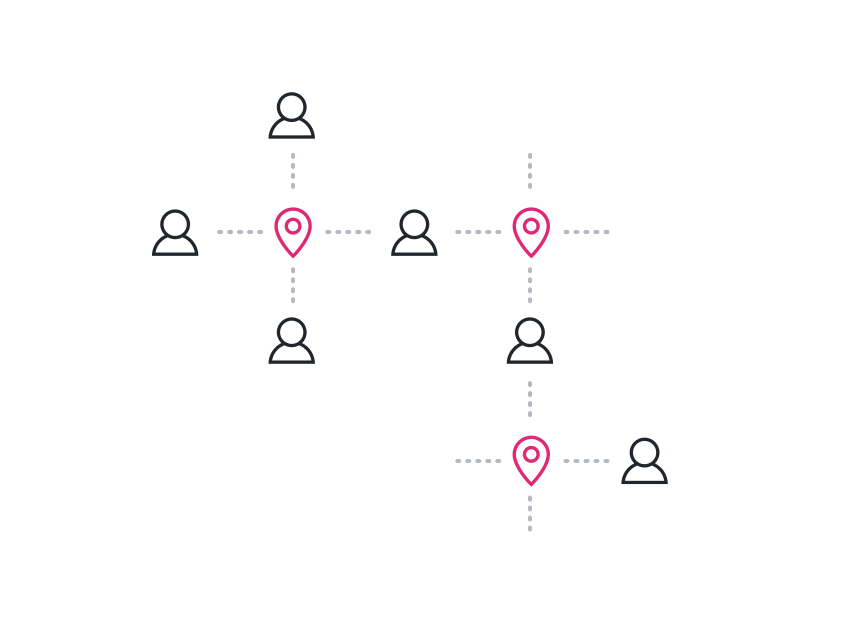
Cache anything at the edge
CDN enables the caching of all content types at the edge, getting you as close to your customers as possible.
Enhance performance
Closer delivery means faster delivery, improving user experience, retention and conversion.
Lower costs
DADI’s decentralized architecture reduces prices by removing many of the costs associated with traditional cloud environments. These savings are passed on to you.
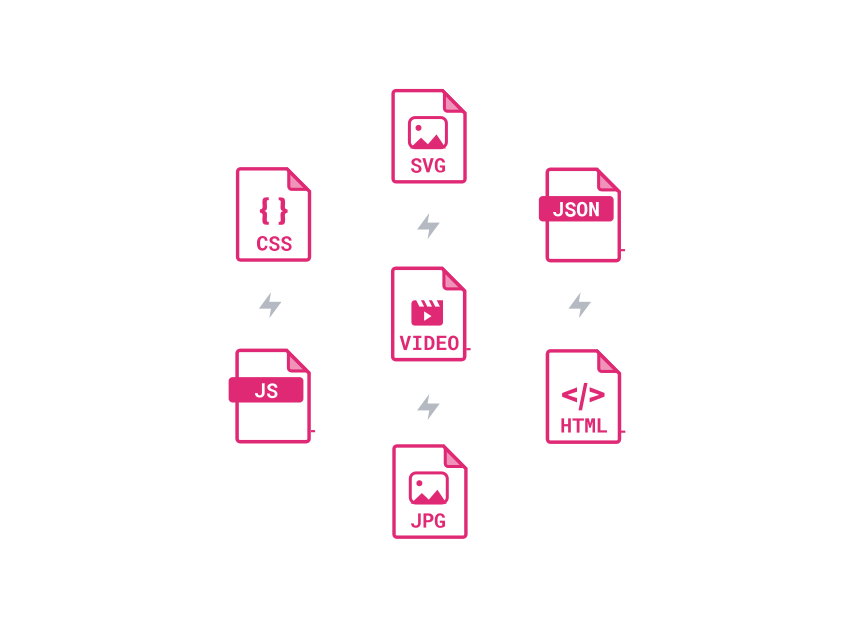
DADI CDN is analogous to a traditional CDN (Content Distribution Network) such as Akamai and Limelight. It is designed to carry the processing and delivery load associated with image manipulation and asset delivery (CSS/JS/fonts) and acts autonomously as a layer on top of your core product.
CDN has full support for caching, header control, image manipulation, image compression and image format conversion. An authenticated API allows for fine grained cache control in the form of content invalidation on an individual file or collective path basis.

CDN lets you edit images easily using query strings.
Join our waiting list for priority access – and share a referral link to jump up the queue. Opt in via your account page at my.dadi.cloud.
Since the very beginning, DADI CDN has had built-in support for serving assets from Amazon S3 buckets. Released earlier this week, DADI CDN 3.0 ships with additional support for Digital Ocean Spaces.


A cloud storage solution for all types of data, with built-in security, privacy and redundancy.

CRM layer that works with anonymous and known records to make user data directly actionable.

Real-time, streaming data layer providing accurate metrics at individual and product level.

Data visualization for Identity and Track, but capable of taking data feeds from any source.

A machine learning layer that predicts user behaviour based on past interactions.

Taxonomic framework for automated content classification through machine learning.


